




Ferrari 812 GTS for Sale near Tega Cay, SC
The Ferrari 812 GTS occupies a position in the modern Ferrari lineup that very few cars in any manufacturer’s history have ever managed to hold: it is the fastest, most powerful open-top grand touring car Ferrari has ever built for public sale, and it does its job with the kind of theatrical intensity that makes every drive feel like an occasion worth dressing for. For buyers near Tega Cay, SC seeking a Ferrari 812 GTS, Koenigsegg Charlotte at 6010 Kenley Ln in Charlotte, NC carries an inventory of exclusive and exotic vehicles and is positioned to source and present exactly this class of car. A short drive across the state line puts you in one of the most serious exotic car dealerships in the Carolinas.
This guide covers everything a prospective 812 GTS buyer should know — the engine, the convertible mechanism, the driving character, the differences from the 812 Superfast coupe it is derived from, and why this particular model represents one of the most compelling last expressions of the naturally aspirated V12 grand tourer before the industry moves definitively toward electrification.
The Engine: Ferrari’s Last Great Naturally Aspirated V12
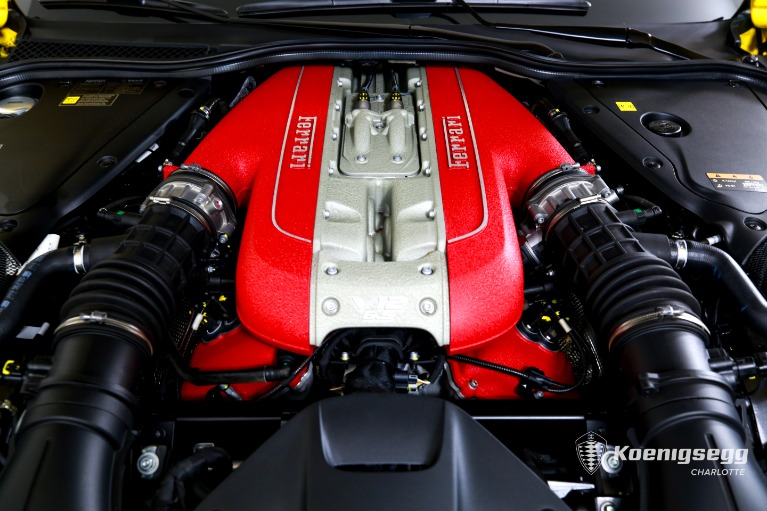
The headline specification of the 812 GTS is the 6.5-liter naturally aspirated V12 producing 789 horsepower at 8,500 rpm and 530 lb-ft of torque at 7,000 rpm. These are numbers that demand a moment of pause. In an era when manufacturers have largely moved to turbocharged engines to meet emissions and efficiency targets, Ferrari’s decision to develop and refine the F140 V12 to this state of tune represents an engineering commitment that becomes more significant with every passing model year.
The engine revs to 8,900 rpm — a ceiling that is almost inaccessible in the modern turbocharged landscape, where power arrives low and early rather than building with the kind of linear, accelerating urgency that defines a high-revving naturally aspirated engine. The 812 GTS does not simply deliver power; it builds toward it in a way that rewards the driver for holding a gear, for timing a downshift, for understanding the engine’s character rather than simply pressing the accelerator and waiting. That relationship between driver and machine is what Ferrari’s most devoted customers come to the brand for, and the 812 GTS represents its fullest available expression.
Zero to 62 mph arrives in 3.0 seconds. The top speed is rated at 211 mph. These figures are achieved in an open-top car weighing approximately 3,835 pounds with the roof retracted — a packaging achievement that reflects both the sophistication of Ferrari’s chassis engineering and the rigidity work the team did to compensate for removing the coupe’s structural roof.
The Retractable Hard Top: Engineering the Open-Air Experience
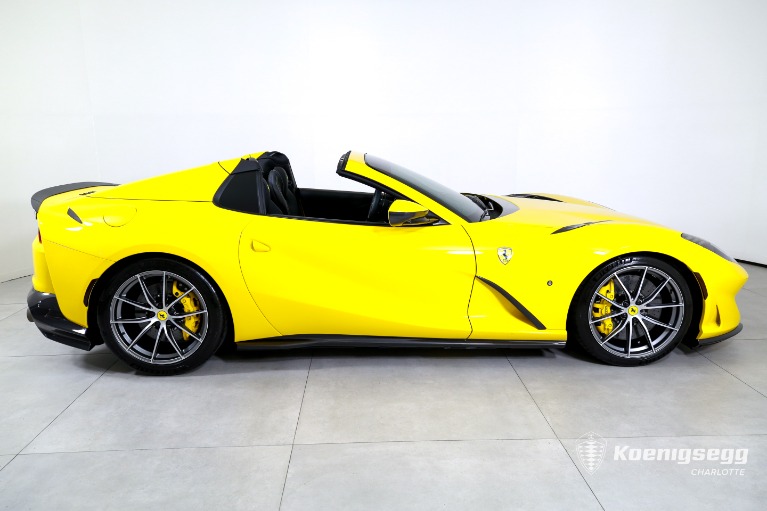
The 812 GTS uses a retractable hardtop rather than a fabric soft top — a choice that preserves the car’s proportions when closed, ensures the structural rigidity that a 789-horsepower rear-wheel-drive platform demands, and provides a more refined closed-cabin experience than any cloth hood could deliver at highway speed.
The roof mechanism operates in approximately 14 seconds and can be actuated at speeds up to 28 mph, which means brief stops at a light are sufficient time to change configuration. When folded, the panels retract into a compartment behind the cabin that Ferrari specifically engineered for the GTS variant, accepting a 50-liter reduction in cargo space compared to the 812 Superfast coupe as the price of the convertible mechanism. Given that the 812 is not primarily a luggage hauler, this is a tradeoff most owners will find straightforward.
With the roof retracted, the 812 GTS’s long bonnet, muscular rear haunches, and low-slung cabin form a proportion that is close to objectively perfect for an open grand tourer. Ferrari’s styling language for this generation draws from the classic front-engined V12 cars of the 1960s — particularly the 365 GTB/4 Daytona — while remaining unmistakably contemporary. It is a car that photographs beautifully from every angle and is, in person, more dramatic than photographs suggest.
Chassis, Handling, and the Virtual Short Wheelbase
The 812 GTS is built on the same platform as the 812 Superfast, with Ferrari’s advanced aluminum space frame construction providing both stiffness and weight savings compared to a conventional steel structure. The suspension is a double-wishbone arrangement at all four corners, with magnetorheological dampers that adjust their stiffness in real time based on road conditions and driver-selected mode.
The most technically significant chassis feature is the Virtual Short Wheelbase system — a four-wheel steering setup in which the rear wheels turn in the opposite direction to the fronts at lower speeds, effectively shortening the car’s dynamic wheelbase and making it rotate with a sharpness that its 2,720mm actual wheelbase would not otherwise permit. At higher speeds, the rear wheels turn in the same direction as the fronts to enhance stability. The result is a car that feels more agile in tight corners than its size suggests, without sacrificing the planted, stable character that high-speed grand touring requires.
Ferrari’s Side Slip Control system — SSC 6.1 in the 812 — manages the distribution of torque and the degree of wheelspin with sufficient precision that experienced drivers can use the car’s rear-wheel-drive chassis expressively without the system intervening prematurely, while less experienced drivers have a meaningful safety net under power. This balance is considerably harder to achieve than it sounds, and it is a significant part of what separates a Ferrari from a faster-on-paper competitor.
According to Ferrari’s official technical documentation, the 812 GTS shares its core chassis architecture with the Superfast but incorporates specific torsional rigidity enhancements to compensate for the structural contribution of the removed roof — a necessary engineering investment that Ferrari undertook rather than simply launching the GTS as a softer, more compliant variant of the coupe.
Interior: Grand Touring Done Ferrari’s Way
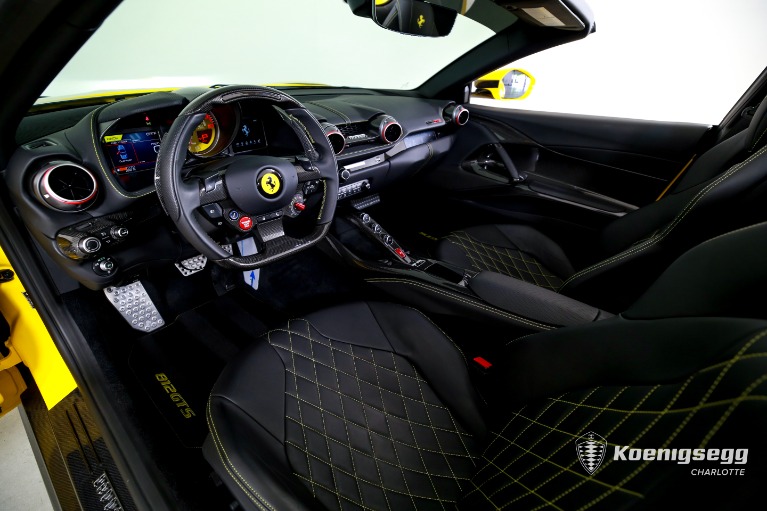
The cabin of the 812 GTS is driver-focused without being spartan. The primary driving controls — steering wheel, paddle shifters, manettino dial — are positioned with the precision of a racing car. The infotainment and climate interfaces are handled through a central touchscreen that, on recent model years, has been updated for improved responsiveness. The passenger receives their own secondary display, a feature that reinforces the GTS’s positioning as a car for two people who both want to be engaged with the experience rather than one driver and one passenger.
Ferrari’s Tailor Made personalization program, through which the majority of 812 GTS examples were specified, means that virtually no two cars in the wild are identical. Buyers working through a dealer like Koenigsegg Charlotte to source a specific pre-owned 812 GTS will want to pay close attention to the individual specification of each available car, as interior color combinations, stitching choices, carbon fiber applications, and exterior paint options vary significantly and have a material effect on both the ownership experience and the car’s long-term desirability on the pre-owned market.
What to Look for in a Pre-Owned 812 GTS Specification
On the pre-owned market, 812 GTS examples with the Tailor Made carbon fiber steering wheel, full carbon fiber interior trim package, and Alcantara headliner command meaningful premiums over standard-specification cars and tend to be more liquid at resale. The exterior specification also matters considerably: factory special colors from Ferrari’s Tailor Made palette — including the various Blu, Verde, and Giallo options outside the standard range — have historically held value better than the standard catalog colors on V12 models.
The 812 GTS in Context: Why This Model Matters
The 812 GTS is significant beyond its specifications because of what it represents in Ferrari’s trajectory. The naturally aspirated front-engined V12 grand tourer is a format that Ferrari has been refining since the 250 GT of the 1950s. The 812 GTS is among the last — and almost certainly the highest-performance — expression of that formula before Ferrari’s next chapter, which involves hybridization and eventually electrification of the V12 platform.
The 812 Superfast that preceded the GTS was already a sales success on the basis of this logic, with buyers correctly anticipating that a naturally aspirated 789-horsepower V12 open grand tourer would not be followed by something more powerful, more analog, or more emotionally direct. The 812 GTS is a car whose significance will become clearer with time rather than less, and the pre-owned market has priced it accordingly.
Hagerty’s collector car market data has consistently shown that limited-production, final-expression models from Ferrari — particularly open-top variants of important coupe platforms — appreciate meaningfully over five-to-ten year periods as production ends and the significance of the moment becomes clearer to the collector community. The 812 GTS fits this pattern closely.
Owning a Ferrari 812 GTS: Practical Considerations
Maintenance
Ferrari specifies a major service interval at every 20,000 kilometers, which for most owners equates to approximately every two to three years depending on usage. The F140 V12 is not a mechanically fragile engine — it is derived from a racing architecture that has been progressively civilized over decades — but it rewards correct servicing at proper intervals with reliability that surprises owners unfamiliar with modern Ferraris. The persistent reputation for unreliability that attached to Ferraris of the 1980s and 1990s has not been an accurate description of modern production cars for well over fifteen years.
For 812 GTS owners in the Charlotte and Tega Cay area, the service and parts department at Koenigsegg Charlotte provides access to factory-specification parts, the latest technical bulletins, and a team familiar with vehicles at this level of complexity and value.
Insurance
Specialty agreed-value insurance from carriers such as Hagerty or Chubb is strongly recommended for an 812 GTS rather than standard auto insurance. Standard policies pay actual cash value at the time of a claim, which may not reflect the car’s appreciated market value. An agreed-value policy fixes the insured amount at the time of purchase, ensuring that a total loss results in a payment that reflects what the car is actually worth in the current market rather than what a standard insurer’s algorithm determines.
Storage and Usage
The 812 GTS is a usable car in the sense that Ferrari intended — it can and should be driven rather than stored. That said, the retractable hardtop mechanism benefits from regular operation to keep seals and actuation components in correct condition, and extended storage without periodic exercise is not recommended. For owners who plan seasonal use in the Carolinas, a climate-controlled storage arrangement and a battery maintenance system will protect the car’s complex electrical architecture during periods of inactivity.
Find Your Ferrari 812 GTS at Koenigsegg Charlotte
The Ferrari 812 GTS represents a culmination — of Ferrari’s V12 grand touring tradition, of naturally aspirated engine development, and of the open-top performance car as a format. It is a vehicle whose importance is obvious at 8,000 rpm with the roof retracted, and equally obvious when you consider what is coming next. For buyers near Tega Cay, SC who want to own one, Koenigsegg Charlotte is the right starting point.
The dealership is located at 6010 Kenley Ln, Charlotte, NC 28217 — approximately 25 minutes from Tega Cay across the state line. The team can be reached at 704-248-8699 to discuss current inventory and incoming vehicles. You can also browse available inventory online or contact the team directly to discuss your specific requirements for a Ferrari 812 GTS acquisition.